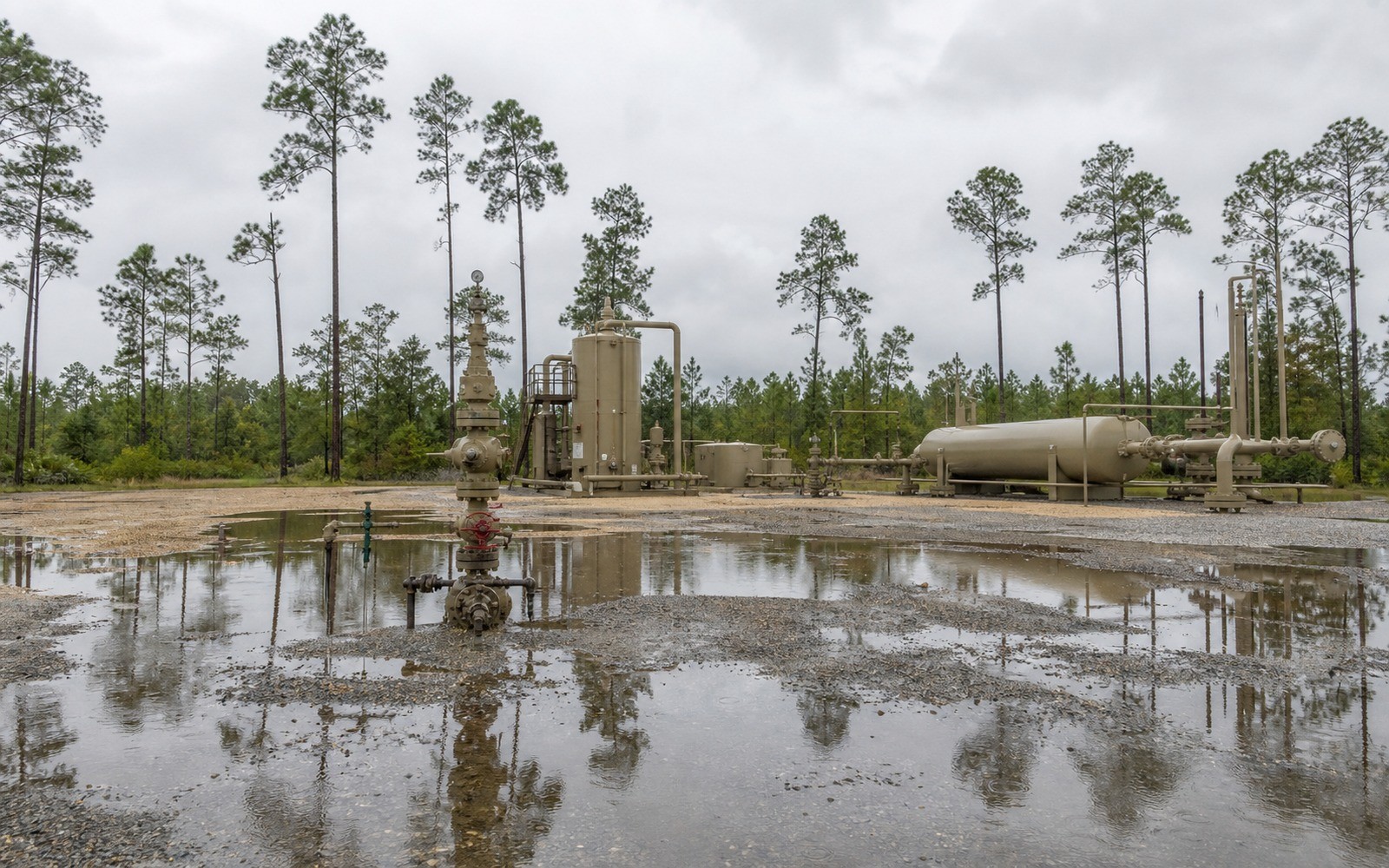
Haynesville Shale Mineral Rights
Gulf Coast LNG demand has pulled the Haynesville out of a decade-long lull, and mineral owners who watched activity go quiet after 2012 are now fielding real offers again.
The Haynesville Shale, running through northwest Louisiana's Caddo, DeSoto, Bossier, and Red River Parishes and into Harrison and Panola Counties in East Texas, is one of the deepest and highest-pressure shale gas plays in the country, which made it expensive to develop and quick to go quiet when gas prices fell after its initial 2008-2012 boom. It's since come back to life as operators like Southwestern Energy, Comstock Resources, and Aethon Energy chase demand tied to Gulf Coast LNG export terminals.
That renewed activity is drawing fresh capital into a basin that many mineral owners had written off as done, and it's also drawing the flip-and-assignment activity that tends to follow wherever drilling permits start climbing again.
We also see families whose mineral interests were leased during the original 2008-2012 boom and then sat largely dormant through the following decade of low gas prices, only to see renewed operator interest arrive with the recent LNG-driven activity. Understanding whether your specific tract fits that renewed-interest profile, or remains outside current development plans, is central to a fair valuation.
Depth and Pressure Drive Everything About This Basin
Haynesville wells are drilled deeper than most U.S. shale plays, often 10,000 to 14,000 feet, under high reservoir pressure that makes individual wells expensive but capable of very strong initial production rates. That combination means development economics here are tightly tied to gas price, more so than in oil-weighted basins, because the wells cost more to drill and complete relative to the value of what they produce.
The upside is that when gas prices and LNG demand support it, as they have recently, operators can move quickly with multi-well pads once permitting clears, so a quiet tract can see real activity within a year or two of a nearby permit filing.
LNG Demand Is Reshaping the Buyer Pool
As Gulf Coast LNG facilities have ramped feedgas demand, capital chasing Haynesville minerals has increased noticeably, and with it the volume of unsolicited offer letters landing on owners in Caddo and DeSoto Parishes especially. Many of these come from assignable contracts written to lock in acreage cheap before the real capital shows up, betting that LNG-driven activity will make the tract easy to flip.
A direct buyer working this basin should be able to speak specifically to which LNG facilities are driving demand for gas from your particular county, and to recent permit activity nearby, rather than offering a generic number detached from what's actually happening on the ground.
Louisiana and Texas Title Differences
Because this basin straddles the Louisiana-Texas border, title work differs meaningfully depending on which side your tract sits on. Louisiana's civil law system and forced heirship rules affect how mineral interests pass through estates differently than Texas common law, and we account for that in diligence rather than applying a one-size approach across the state line.
Closing on Haynesville Minerals Today
We check recent permit and completion activity specific to your parish or county, confirm current operator, and run a valuation that accounts for both current production and realistic near-term development given LNG-driven demand. Closing typically takes three to four weeks, with Louisiana parish clerk timelines sometimes running slightly longer than comparable Texas counties.
Questions From the Acquisition File
Plain answers on title, production, pricing, and timing, so the purchase terms hold no surprises.
Why is there suddenly more interest in my Haynesville minerals after years of quiet?
Gulf Coast LNG export demand has driven renewed drilling in this basin since roughly 2022, reversing a long lull that followed the play's initial 2008-2012 boom.
Why are Haynesville wells so expensive to drill?
The formation sits deep, often 10,000 to 14,000 feet, under high pressure, which raises drilling and completion costs relative to shallower shale plays and ties economics closely to gas prices.
Does it matter whether my tract is in Louisiana or Texas?
Yes, title and estate rules differ between Louisiana's civil law system and Texas common law, which affects how mineral interests transfer through inheritance and how we structure diligence.
How do I know if a Haynesville offer reflects real LNG-driven activity or is just speculative?
Ask the buyer which specific LNG facility is driving demand for gas from your area and what recent permits have been filed nearby. A real answer should be specific, not generic.
How long does closing take on a Louisiana parish tract?
Typically three to four weeks, sometimes slightly longer than comparable Texas counties depending on the parish clerk's recording timeline.
How much has LNG demand actually changed drilling pace in this basin?
Meaningfully, with permit and completion activity picking up substantially in the core counties since roughly 2022 compared to the quieter years before, though pace still depends on ongoing gas price and export demand.
What if my Haynesville lease from the original boom has expired?
An expired lease can mean your minerals are open to re-leasing given current LNG-driven interest, which changes the value conversation compared to a tract still held by production.
Keep reading before you sign
Anadarko Basin Mineral Rights
Anadarko Basin minerals in western Oklahoma or the Texas Panhandle? Direct buyer familiar with decades-old vertical wells and overlapping STACK development.
SCOOP & STACK Mineral Rights
SCOOP or STACK minerals in Grady, Stephens, Garvin, Kingfisher, or Canadian County, Oklahoma? Direct buyer, real decline-curve pricing, no reassignment chain.
Bakken Mineral Rights
Bakken minerals in Mountrail, McKenzie, Williams, or Dunn County, North Dakota? We buy direct on Williston Basin tracts, real spacing-unit review, no assignment chain.
Want this issue reviewed against your mineral-interest file?
Send the county and state, owner name, producing status, and the records you already have.