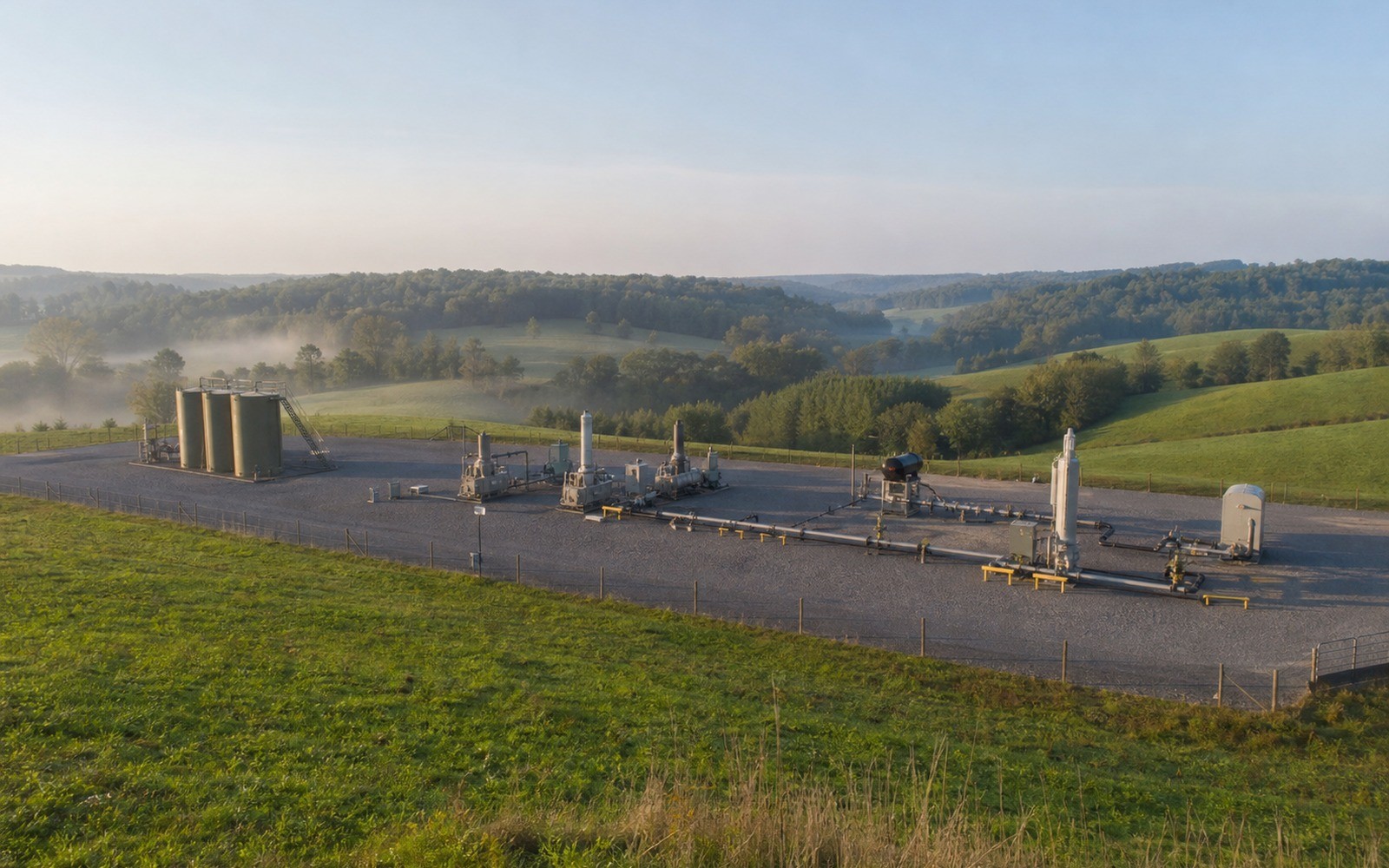
Marcellus Shale Mineral Rights
Appalachian mineral ownership carries a different history than anywhere in Texas or Oklahoma, and a lot of Marcellus offers get the deed research wrong because of it.
The Marcellus Shale under Pennsylvania and West Virginia is the largest natural gas field in the United States by production volume, developed heavily since the mid-2000s by operators including EQT, Range Resources, and CNX Resources across Susquehanna, Bradford, Washington, and Greene Counties in Pennsylvania and the northern panhandle counties of West Virginia. Unlike the newer plays out west, Appalachian mineral rights were often severed from surface ownership generations ago, sometimes back to the coal era in the early 1900s, long before anyone anticipated shale gas.
That history means a meaningful share of Marcellus mineral owners hold interests through century-old severance deeds with vague depth language, unclear legal descriptions, or ownership that split repeatedly across generations without ever being formally cleaned up.
We also regularly work with owners managing interests across multiple Pennsylvania or West Virginia counties inherited from a single ancestor's original land holding, split over generations into pieces small enough that no single heir realized the full family interest until everyone compared notes. Consolidating and confirming that full picture is often the most valuable part of the process for these sellers.
Split Estate and the Weight of Old Deeds
In much of Appalachia, mineral rights were severed from the surface long before horizontal drilling existed, and the deed language governing those old severances wasn't written with modern shale development in mind. We regularly find deeds that reserved 'oil and gas' without specifying whether that reservation extends to the deep Marcellus and Utica intervals, which has led to real legal disputes in Pennsylvania and West Virginia courts over the past decade. Resolving that ambiguity is often the single most important step before we quote a number.
Because these interests have often passed through multiple generations without formal probate cleanup, it's also common to find fractional interests held by heirs who don't know they own anything, or whose names on the deed don't match current identification. We help sort through that as part of the purchase process rather than treating it as a dealbreaker.
Pooling and Unit Boundaries in a Fragmented Landscape
Appalachian tracts tend to be smaller and more irregularly shaped than the sections-and-quarter-sections grid common out west, which makes pooled drilling units here more complex to map. Confirming exactly which unit your tract falls into, and cross-checking that against your royalty statements, is essential before valuing a Marcellus interest, since misallocation between adjoining units is more common here than in more uniformly surveyed basins.
Pennsylvania's royalty statute also sets specific disclosure requirements for what operators must show on a statement, which gives us a clearer baseline to check your division order calculations against than in some other states.
Direct Purchase vs the Landman-Broker Model
A lot of Appalachian mineral transactions still run through independent landmen working on commission for undisclosed buyers, a model that predates the assignable-contract flipping common in Texas but produces a similar result: the number you're offered reflects a broker's cut before it reflects the actual buyer's underwriting. We buy directly, which means the number we quote after reviewing your deed and production history is the number that closes.
What Closing Looks Like in Pennsylvania or West Virginia
We start with a title search to resolve any severance ambiguity, confirm your interest against operator statements, and quote based on the resolved ownership picture. Closing typically takes four to six weeks in this region, longer than a clean Texas tract, largely because of the additional title work these older deeds require. Since we handle that work ourselves, it doesn't fall on you to hire a title attorney before we can move forward.
Questions From the Acquisition File
Plain answers on title, production, pricing, and timing, so the purchase terms hold no surprises.
My deed just says 'oil and gas' with no mention of shale. Do I still own the Marcellus rights?
Usually yes, but the specific language matters and has been litigated in Pennsylvania and West Virginia courts. We review the exact deed wording before confirming what's included in a purchase.
I think I might have inherited a mineral interest but I'm not sure. Can you help figure that out?
Yes, this is common in Appalachia given how many generations these interests have passed through. We can help trace ownership as part of our diligence process.
Why does closing take longer here than what I've heard about Texas deals?
Older severance deeds and multi-generation heir chains typically require more title work to resolve cleanly, which adds time compared to a straightforward modern Texas conveyance.
Should I talk to an attorney about my deed before selling?
It's worth talking to your attorney if you have any doubt about your ownership chain, particularly with older severance deeds. We're happy to work alongside your attorney during the process.
Do you buy interests where the deed language is ambiguous about depth?
We evaluate these on a case-by-case basis after reviewing the specific deed language and relevant case law, rather than declining automatically.
Do royalty statute disclosure rules differ between Pennsylvania and West Virginia?
Yes, and we account for each state's specific requirements when reviewing your statements, since the level of detail operators must disclose isn't identical across the two states.
What if multiple heirs in my family disagree about selling?
We can purchase individual heir shares without requiring unanimous family agreement, which lets each owner make their own decision about their specific fractional interest.
Keep reading before you sign
Utica Shale Mineral Rights
Utica Shale minerals in Belmont, Monroe, Guernsey, or Carroll County, Ohio? Direct buyer on wet-gas and dry-gas window tracts, no assignable-contract markup.
Niobrara Mineral Rights
Own minerals in the Niobrara formation across the DJ Basin, Powder River Basin, or Wyoming? Direct buyer who prices by basin, not one blended formation average.
DJ Basin Mineral Rights
DJ Basin minerals in Weld County, Colorado or the Wyoming/Nebraska panhandle? Direct buyer who tracks setback regulation and permitting reality, no flip markup.
Want this issue reviewed against your mineral-interest file?
Send the county and state, owner name, producing status, and the records you already have.